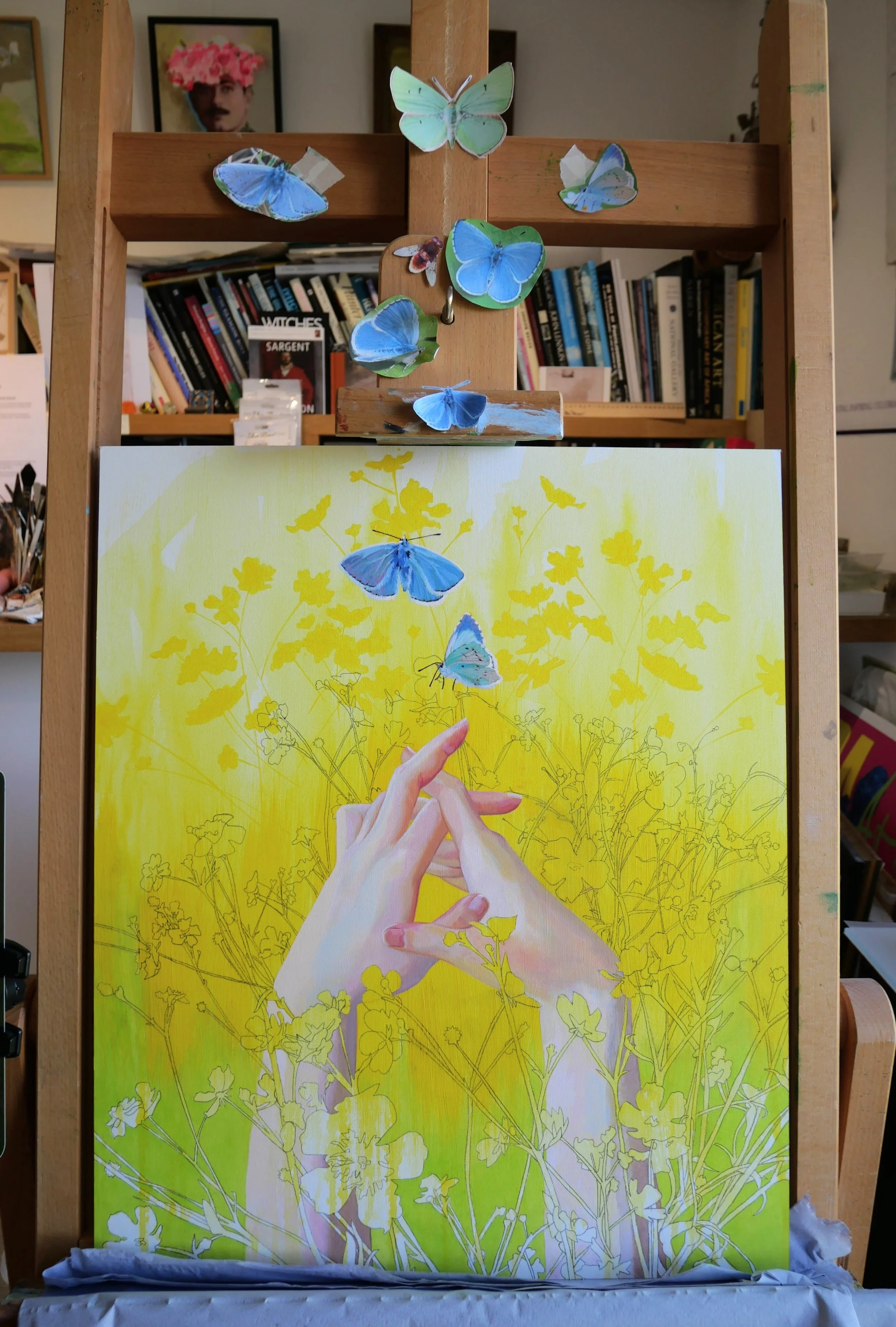
Beauty in art can still be seen as controversial and not interesting enough to be taken seriously. For the most part, integrity in art has shifted from mere eye-candy to challenging perceptions of what art can be, provoking political thought and getting angry at the status quo, reflecting what it is to be human. And why not - exploring difficult themes is often viewed as the most honest path a serious artist can take. So why is the art that holds up a mirror to the modern experience more weighty? Why can’t we also find a place in contemporary art for a kind of transformational art? As Waldemar Januszczak would say, “escape the rubbish tip of the modern urban experience” - where we can push past the depths of the human experience, into an unexpectedly deep space that magically opens up into some kind of Utopia. Just for a brief moment.
What could be so disagreeable about that?
Well, it questions all sorts of assumptions about the present moment, and why we feel the need to escape and dream that the human condition could be better, more just or equitable. As the erudite author Katherine Rundell was once quoted, “I believe in the human project - I believe in the creation of beauty - I believe in gathering flowers even in this hell.” We all know we are living in precarious times, so why not stop and smell the roses. Step away from the daily grind and take a breath.
Beauty is quite political, when you stop to think about it. Exploring beauty in art can be seen as a rejection of the mayhem and ugliness we experience in the world around us. Therefore, beauty can be seen as a political aesthetic. Hence beauty being a radical choice. If we can create a safe haven in the making of these beautiful objects, our work can be seen as uplifting, dare I say hopeful. It might not be as sexy as angry art, but it’s better for your soul.